When do babies start walking?
Wondering when babies start walking? Or looking for ways to help your baby develop their walking abilities? Read on below to get the rundown on: when to expect your baby to walk some activities you can do to help encourage walking in your child when to consult with a paediatric physio to help with d
Wondering when babies start walking? Or looking for ways to help your baby develop their walking abilities?
Read on below to get the rundown on:
- when to expect your baby to walk
- some activities you can do to help encourage walking in your child
- when to consult with a paediatric physio to help with development of this milestone.
When do babies start walking?
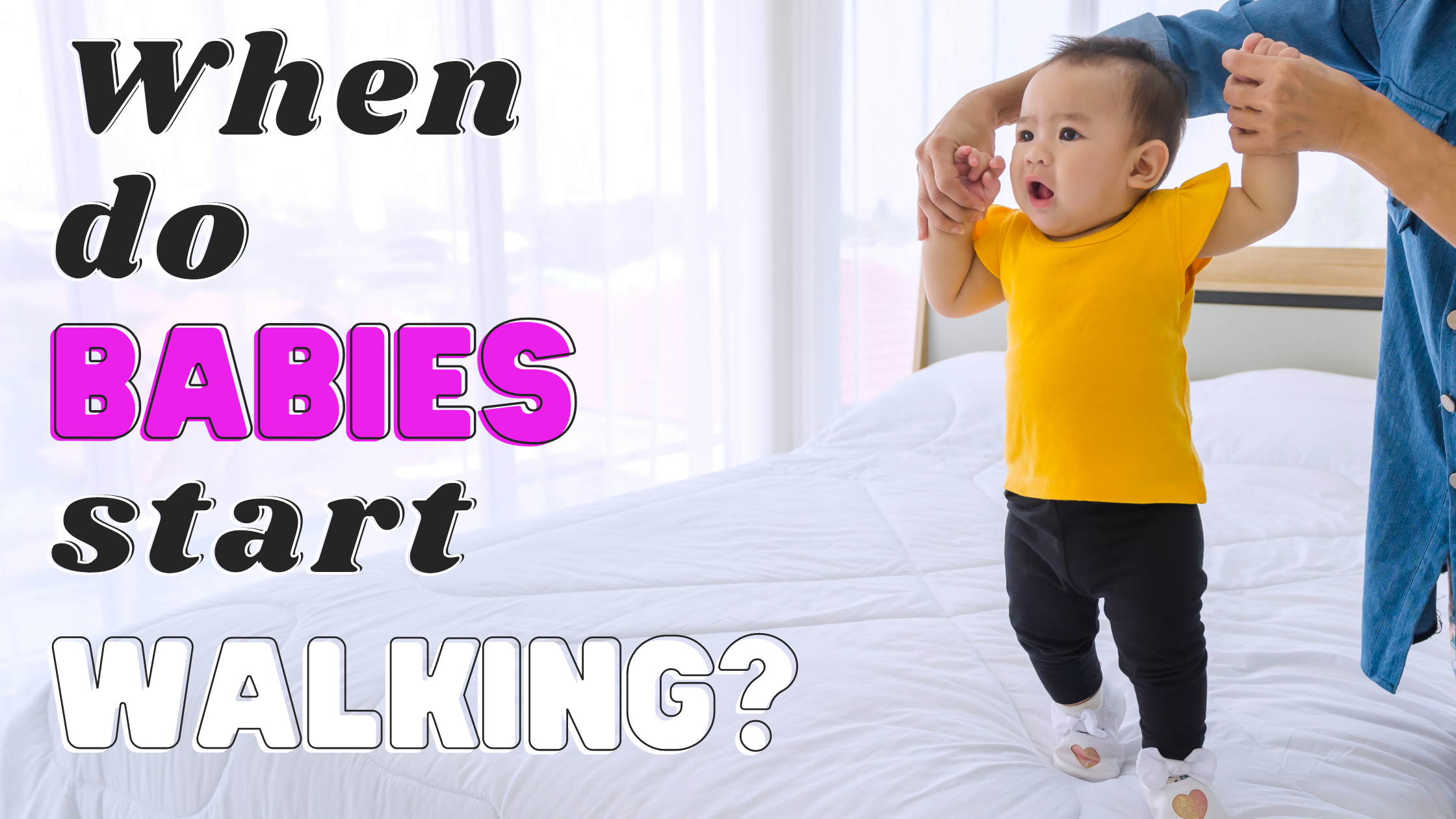
The average age we expect to see typical children begin to walk is around 13 months of age. Some children may walk as early as 9 months whilst some may walk as late as 18 months. This is all within normal ranges.
Some factors that may influence the age of independent stepping can include:
- Environment and opportunities to practise
- Confidence and personality of your child
- Floor mobility
- Strength of their feet in standing
What are the key ingredients for walking development in babies?
Before your child can start to take steps independently, there are a few crucial skills they need to learn to develop their walking skills.
One of these is weight shifting side to side. Without this sideways movement pattern, your child may find it quite challenging to initiate steps moving forward.
Later in the article we will provide you with some exercises you can try with your child below if you have noticed a plateau in their skill development of learning to walk.
Your child’s first steps
What we typically see when your child starts to walk is their arms will be held up high coupled with a very wide stepping pattern.
After 6 – 12 months of walking, we start to see a more efficient walking pattern as they develop a heel-toe pattern, their strength and balance improve, as well as their ability to control their speed when walking.
It is normal for your child to fall often when learning to walk, in fact, it is estimated they will fall around 17 times each hour.
Reassurance and lots of positive encouragement is optimal at this time to reduce any regression of skills learnt.
Exercises that can help babies start walking
As mentioned above, if you have any concerns regarding your child’s development it is a great idea to bring them in to see a Paediatric Physiotherapist for an assessment. This can provide both practical advice and re-assurance for parents.
If you are looking to help your baby to develop walking, here are some examples of some exercises you can try at home to promote independent stepping:
- Cruising between furniture
- Sit to stand to stepping forward
- Creating distance between you and your child
Baby Walking Exercise #1: Cruising between furniture
Before stepping and walking, we typically see cruising along furniture which encompasses a sideways stepping pattern.
Your child will begin with their chest leaning forwards, two hands out in front and stepping to the side.
One way to progress this is to encourage them to take a step towards another object within arm’s reach.
As they build confidence with this, you can start to slowly increase the distance between the 2 objects.
Remember: slow and steady wins the race!
We don’t want to push them too quickly as they require time to learn the balance skills required for walking.
Baby Walking Exercise #2: Sit to stand to step forward
Another way to build confidence with independent stepping is to create momentum moving forwards.
Once your child has the ability to stand by themselves without support, we want to give them momentum to take a few steps forwards.
Have them sit on a small step, stool or in your lap.
Encourage them to stand up from this position and walk towards their parent or carer a few steps away from them.
Once they have the hang of this, you can start to increase this distance to allow more steps taken between the 2 people.
Baby Walking Exercise #3: Creating distance between you and your child
The third way you can increase your child’s confidence with walking is creating distance with an object.
Sometimes your child may be ready and have the skills required to walk, however lack the confidence and feel much safer by holding your hands.
You can try and supplement your hands with a fun hula hoop or magic glitter stick to allow both yourself and your child to hold on, however you can gradually peel your hands away from the object as they continue to walk.
When should your child see a Paediatric Physio?
Early detection and early intervention are crucial in assisting your child if you have any concerns regarding their skill progression. Here are some things to look out for:
- Strong resistance to learning to walk
- Persistent toe walking (more than 25% of the day)
- Asymmetrical toe walking
- Limping
- Reduced drive or motivation to move around by themselves
- Significantly flat feet or their feet rolling in
- Not taking their first steps by 18 months
If you are concerned, come and see our Paediatric team for a consult. We can assist you further by equipping your child with the necessary skills to start stepping independently.
Happy stepping!
Got a niggle you can't shake?
Our physios have been getting Penrith moving since 1989. No referral needed for private patients.